
I. Foundations of Human Chemistry

- Description
- Reviews
I. Foundations of Human Chemistry
The Chemical Blueprint of Life
Human Architecture Series | Clinical Pathology Quest
Before Life Became Biology, It Was Chemistry.
What makes the human body function? How do invisible atoms and simple molecules sustain consciousness, generate energy, transmit electrical signals, and maintain the delicate balance between life and death?
The answers begin at the most fundamental level of human existence: chemistry.
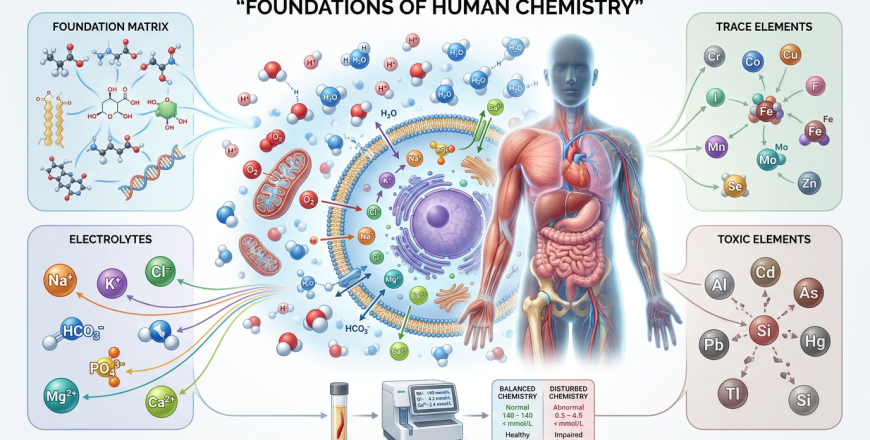
Welcome to Foundations of Human Chemistry, the opening expedition of the Human Architecture educational series, where we explore the essential chemical building blocks that construct, regulate, protect, and sometimes threaten the human body.
Through 27 educational lessons organized into four interconnected sections, learners will discover how fundamental chemical substances contribute to human physiology, how their disturbances produce disease, and how clinical laboratories translate their concentrations into meaningful diagnostic information.
Four Expeditions into the Chemistry of Human Life
Expedition 0 — The Foundation Matrix: Water, Hydrogen, and Oxygen
Our journey begins with the fundamental chemical environment of life. Explore how water provides the medium for biological reactions, hydrogen participates in acid–base regulation and cellular energetics, and oxygen enables aerobic metabolism while contributing to oxidative injury.
Expedition I — Electrolytes: The Electrical and Chemical Regulators
Discover how sodium, potassium, chloride, bicarbonate, phosphate, magnesium, and calcium coordinate cellular communication, membrane potentials, fluid distribution, metabolic activity, and physiological homeostasis. Learn why even small disturbances can trigger serious clinical emergencies.
Expedition II — Trace Elements: The Invisible Molecular Engineers
Enter the microscopic world of chromium, cobalt, copper, fluoride, iodine, iron, manganese, molybdenum, selenium, and zinc. Investigate their biological roles, clinical significance, deficiency states, toxic effects, and the laboratory challenges associated with measuring elements present at extremely low concentrations.
Expedition III — Toxic Elements: When Chemistry Threatens Life
Explore the darker side of human chemistry through aluminum, cadmium, arsenic, lead, mercury, thallium, and silicon. Understand how chemical exposure, molecular interference, accumulation, and toxicity can disrupt biological systems—and how laboratory investigations help identify these threats.
Beyond Memorization: Understanding the Architecture
Each lesson connects five essential dimensions of clinical laboratory medicine:
-
Chemical Foundations: Molecular properties, biological functions, and physiological regulation.
-
Human Physiology: Interactions between chemical substances, cells, organs, and integrated biological systems.
-
Clinical Significance: Deficiency, excess, toxicity, disease mechanisms, and associated clinical manifestations.
-
Laboratory Investigation: Analytical methods, specimen requirements, measurement limitations, interferences, and quality assurance.
-
Diagnostic Interpretation: Clinical correlations, abnormal-result investigation, and evidence-informed laboratory decision-making.
Your Mission as a Learner
By completing this section, you will develop a deeper understanding of how simple chemical substances support the complexity of human life, recognize the clinical consequences of chemical imbalance, and strengthen your ability to interpret laboratory findings within their physiological and pathological contexts.
Designed for medical students, clinical pathology residents, laboratory professionals, and healthcare practitioners, this expedition transforms isolated laboratory measurements into an interconnected understanding of human biology.
The Journey Begins Here
Every heartbeat, nerve impulse, metabolic reaction, and cellular defense depends upon a remarkably coordinated chemical environment.
To understand human disease, we must first understand the chemistry that makes human life possible.
Welcome to Human Architecture.
Explore the elements. Decode the laboratory. Discover the blueprint of life.
-
1
 Water (H₂O): The Dangerous Chemistry Behind Life | Human Architecture
Water is the most familiar substance on Earth—and one of the most misunderstood.
In the first lesson of Human Architecture: Simple Chemicals, we begin our journey through the elemental foundation of life by exploring the remarkable chemistry of water. Far beyond a simple solvent, water is the architectural matrix that shapes cells, powers biochemical reactions, regulates temperature, maintains osmotic balance, and supports every physiological system.
This cinematic scientific documentary follows water from its molecular structure to its clinical significance, revealing how a single molecule influences health, disease, laboratory medicine, and human survival.
In this episode, you will discover:
Why water is the foundation of biological architecture
The unique physical and chemical properties of H₂O
Water compartments and body fluid distribution
Osmosis, diffusion, and membrane transport
Water homeostasis and hormonal regulation
Clinical disorders of water balance
Laboratory assessment of hydration and osmolality
Water through the Human Architecture Reference Framework
Whether you are a medical student, pathology resident, laboratory scientist, physician, or simply fascinated by biology, this lesson will transform the way you understand the most abundant molecule in the human body.
Welcome to Human Architecture. Discover the Blueprint of Life.
-
2
Hydrogen (H₂): The Smallest Shield Protecting Every Cell | Human Architecture
Hydrogen is the smallest element in the universe, yet one of the most powerful architects of life.
In this episode of Human Architecture, we explore the extraordinary biological role of hydrogen gas (H₂), from its molecular simplicity to its emerging importance in redox biology, oxidative stress, gastrointestinal microbiology, and clinical laboratory medicine.
Far beyond being the first element of the periodic table, hydrogen influences cellular communication, antioxidant defense, mitochondrial function, and metabolic homeostasis. Discover how this tiny molecule connects chemistry, physiology, pathology, and modern analytical techniques—including gas chromatography—to reveal a hidden layer of human biology.
In this episode you will discover:
Why hydrogen is called the smallest shield of life
Biological production of hydrogen by the gut microbiome
Hydrogen gas homeostasis
Hydrogen and oxidative stress
Therapeutic and clinical implications of H₂
Hydrogen measurement and gas chromatography
Laboratory interpretation and future clinical applications
Hydrogen through the Human Architecture frameworkWhether you are a medical student, pathology resident, laboratory scientist, physician, or simply fascinated by science, this lesson will change the way you think about the smallest element in the universe.
Welcome to Human Architecture. Discover the Blueprint of Life.
#HumanArchitecture #Hydrogen #LaboratoryMedicine
-
3
Oxygen (O₂): The Molecule That Powers Life | Human Architecture
Every heartbeat, every thought, and every movement depends on one remarkable molecule: oxygen.
In this episode of Human Architecture, we explore molecular oxygen (O₂) as the driving force behind aerobic life. Beyond simply supporting breathing, oxygen powers cellular respiration, fuels ATP production, regulates redox biology, shapes human evolution, and determines the survival of every cell.
From atmospheric oxygen to mitochondrial energy production, this cinematic documentary follows oxygen through the Human Architecture framework, connecting chemistry, physiology, pathology, laboratory medicine, and systems biology into one coherent biological story.
In this episode, you will discover:
Why oxygen is essential for complex life
Oxygen transport from atmosphere to mitochondria
Cellular respiration and ATP generation
Oxygen homeostasis and physiological regulation
Reactive oxygen species and oxidative stress
Laboratory assessment of oxygenation
Clinical disorders of oxygen imbalance
Oxygen through the Human Architecture frameworkWhether you are a medical student, pathology resident, laboratory scientist, physician, or simply fascinated by biology, this lesson will transform your understanding of the molecule that sustains every breath.
Welcome to Human Architecture. Discover the Blueprint of Life.
#HumanArchitecture #Oxygen #MedicalEducation
-
4
Sodium (Na): The Invisible Force Behind Every Cell | Human Architecture
Every heartbeat, every nerve impulse, and every drop of body water depends on one extraordinary ion: sodium.
In this episode of Human Architecture, we explore sodium (Na⁺) as the body's osmotic anchor—the ion that governs water distribution, maintains extracellular volume, generates electrical activity, and supports communication between cells.
From molecular transport and membrane potentials to hormonal regulation, electrolyte balance, and clinical laboratory investigation, this cinematic documentary follows sodium through the Human Architecture framework, connecting chemistry, physiology, pathology, and laboratory medicine into one coherent biological story.
In this episode, you will discover:
Why sodium is the body's principal extracellular cation
Osmotic regulation and body water balance
Sodium transport and membrane physiology
Neural and muscular electrical activity
Hormonal control of sodium homeostasis
Hyponatremia and hypernatremia
Laboratory assessment of sodium disorders
Sodium through the Human Architecture frameworkWhether you are a medical student, pathology resident, laboratory scientist, physician, or simply fascinated by biology, this lesson will transform your understanding of one of the body's most essential ions.
Welcome to Human Architecture. Discover the Blueprint of Life.
#HumanArchitecture #Sodium #LaboratoryMedicine
-
5
Potassium (K): The Electrical Pulse of Life | Human Architecture
Every heartbeat, every nerve impulse, and every muscle contraction depends upon one remarkable intracellular ion: potassium.
In this episode of Human Architecture, we journey into the hidden electrical landscape of potassium (K⁺), the body's principal intracellular cation and one of the most tightly regulated molecules in human physiology.
From membrane potentials and cellular excitability to acid–base balance, renal physiology, and endocrine regulation, potassium orchestrates the electrical language of life. Through the Human Architecture framework, we follow potassium across molecular biology, physiology, pathology, laboratory medicine, and systems biology to reveal how a single ion governs communication between billions of living cells.
In this episode you will discover:
Why potassium is the body's primary intracellular ion
Membrane potential and cellular excitability
Potassium transport and Na⁺/K⁺-ATPase
Renal regulation of potassium
Hormonal control of potassium homeostasis
Hyperkalemia and hypokalemia
ECG manifestations of potassium disorders
Laboratory investigation and interpretation
Potassium through the Human Architecture frameworkWhether you are a medical student, pathology resident, laboratory scientist, physician, or simply fascinated by biology, this lesson will transform your understanding of the electrical foundation of life.
Welcome to Human Architecture. Discover the Blueprint of Life.
#HumanArchitecture #Potassium #Electrolytes
-
6
Chloride (Cl⁻): The Hidden Architect of Human Life | Human Architecture
Often overlooked, chloride is one of the body's most essential ions.
In this episode of Human Architecture, we explore chloride (Cl⁻), the principal extracellular anion and the invisible architect that preserves electrical neutrality, regulates acid–base balance, supports osmotic equilibrium, and enables gastric acid production.
Far beyond simply accompanying sodium, chloride participates in membrane transport, carbon dioxide exchange, renal physiology, and respiratory compensation. Through the Human Architecture framework, we uncover how this seemingly simple ion quietly maintains the stability of nearly every physiological system.
In this episode, you will discover:
Why chloride is the body's principal extracellular anion
Chloride and electrical neutrality
Chloride transport and membrane physiology
Chloride shift and carbon dioxide transport
Acid–base regulation
Gastric hydrochloric acid production
Clinical disorders of chloride balance
Laboratory investigation of chloride
Chloride through the Human Architecture frameworkWhether you are a medical student, pathology resident, laboratory scientist, physician, or simply fascinated by biology, this lesson will transform your understanding of one of the body's most underestimated electrolytes.
Welcome to Human Architecture. Discover the Blueprint of Life.
#HumanArchitecture #Chloride #Electrolytes
-
7
Bicarbonate (HCO₃⁻): The Molecule That Protects Your Blood | Human Architecture
Life depends on one remarkable molecule quietly defending the chemistry of every cell: bicarbonate.
In this episode of Human Architecture, we explore bicarbonate (HCO₃⁻), the body's master chemical shield and the principal extracellular buffer responsible for maintaining acid–base balance. Every heartbeat, enzyme, and metabolic pathway depends on the precise regulation of pH, and bicarbonate stands at the center of this extraordinary chemical defense system.
From carbon dioxide transport and the bicarbonate buffer system to renal regulation, respiratory compensation, and clinical laboratory interpretation, this cinematic documentary reveals how bicarbonate preserves the chemical stability required for life.
In this episode, you will discover:
Why bicarbonate is the body's principal chemical buffer
The bicarbonate–carbonic acid equilibrium
Carbon dioxide transport and acid–base physiology
Renal and respiratory regulation of bicarbonate
Metabolic acidosis and metabolic alkalosis
Laboratory assessment of bicarbonate and total CO₂
Acid–base interpretation through the Human Architecture frameworkWhether you are a medical student, pathology resident, laboratory scientist, physician, or simply fascinated by biology, this lesson will transform your understanding of one of the body's most important chemical defense systems.
Welcome to Human Architecture. Discover the Blueprint of Life.
#HumanArchitecture #Bicarbonate #AcidBaseBalance
-
8
Phosphate (PO₄³⁻): The Hidden Energy of Life | Human Architecture
Every molecule of energy, every strand of DNA, every cell membrane, and every bone depends upon one extraordinary ion: phosphate.
In this episode of Human Architecture, we explore phosphate (PO₄³⁻), the molecular foundation of biological energy, genetic information, cellular signaling, and skeletal architecture. Far beyond its role as an electrolyte, phosphate forms the backbone of ATP, DNA, RNA, phospholipids, and one of the body's principal buffering systems.
Through the Human Architecture framework, we follow phosphate from molecular chemistry to physiology, pathology, laboratory medicine, and systems biology, revealing why this remarkable ion is one of life's most fundamental building blocks.
In this episode, you will discover:
Why phosphate is essential for life
ATP and biological energy metabolism
Phosphate in DNA and RNA
Phospholipids and cell membranes
Bone mineralization and skeletal physiology
Acid–base buffering
Hormonal regulation of phosphate homeostasis
Laboratory investigation of phosphate disorders
Phosphate through the Human Architecture frameworkWhether you are a medical student, pathology resident, laboratory scientist, physician, or simply fascinated by biology, this lesson will transform your understanding of one of the body's most versatile molecules.
Welcome to Human Architecture. Discover the Blueprint of Life.
#HumanArchitecture #Phosphate #Biochemistry
-
9
Magnesium (Mg): The Hidden Mineral Behind Human Life | Human Architecture
Only about 1% of the body's magnesium circulates in the bloodstream. The rest remains hidden—yet it silently governs hundreds of essential biological processes.
In this episode of Human Architecture, we uncover the Magnesium Iceberg Illusion, revealing why normal serum magnesium does not always reflect total body magnesium status. From ATP activation and enzyme catalysis to neuromuscular function, cardiac rhythm, DNA synthesis, and electrolyte balance, magnesium is one of the body's most versatile regulators.
Through the Human Architecture framework, we follow magnesium from molecular chemistry to physiology, pathology, laboratory medicine, and systems biology, exposing the hidden architecture beneath one of clinical medicine's most misunderstood laboratory tests.
In this episode, you will discover:
Why magnesium is called the Magnesium Iceberg
Magnesium distribution throughout the body
ATP activation and enzyme function
Neuromuscular and cardiac physiology
Magnesium and calcium–potassium interactions
Hormonal and renal regulation of magnesium
Laboratory assessment and interpretation
Clinical manifestations of magnesium disorders
Magnesium through the Human Architecture frameworkWhether you are a medical student, pathology resident, laboratory scientist, physician, or simply fascinated by biology, this lesson will fundamentally change the way you interpret magnesium.
Welcome to Human Architecture. Discover the Blueprint of Life.
#HumanArchitecture #Magnesium #Electrolytes
-
10
Calcium (Ca²⁺): The Universal Messenger | Human Architecture
Calcium is far more than the mineral of bones—it is the universal messenger that orchestrates life itself.
In this episode of Human Architecture, we explore calcium (Ca²⁺), one of the body's most versatile signaling molecules. From muscle contraction and nerve transmission to hormone secretion, blood coagulation, bone remodeling, and intracellular communication, calcium coordinates countless physiological processes with remarkable precision.
Through the Human Architecture framework, we follow calcium from molecular chemistry to physiology, pathology, laboratory medicine, and systems biology, revealing how this extraordinary ion translates biological information into action.
In this episode, you will discover:
Why calcium is called the Universal Messenger
Calcium distribution in the human body
Bone architecture and mineral homeostasis
Intracellular calcium signaling
Muscle contraction and nerve transmission
Hormonal regulation (PTH, vitamin D, calcitonin)
Total vs. ionized calcium
Laboratory investigation of calcium disorders
Calcium through the Human Architecture frameworkWhether you are a medical student, pathology resident, laboratory scientist, physician, or simply fascinated by biology, this lesson will transform your understanding of one of the body's most influential ions.
Welcome to Human Architecture. Discover the Blueprint of Life.
#HumanArchitecture #Calcium #LaboratoryMedicine
-
11
Chromium (Cr): The Hidden Trace Element Behind Insulin | Human Architecture
Some of the body's most powerful regulators are needed only in microscopic amounts. Chromium is one of them.
In this episode of Human Architecture, we explore chromium (Cr), a trace element that participates in glucose metabolism, insulin signaling, and metabolic regulation. Although present in minute concentrations, chromium influences the body's ability to utilize glucose efficiently and has become an important topic in nutrition, endocrinology, and laboratory medicine.
Through the Human Architecture framework, we follow chromium from dietary sources and molecular chemistry to physiology, pathology, laboratory investigation, and systems biology, revealing why one of the smallest nutritional elements can have profound metabolic significance.
In this episode, you will discover:
Why chromium is an essential trace element
Chromium and insulin signaling
Glucose metabolism and metabolic homeostasis
Dietary sources and absorption
Chromium deficiency and excess
Laboratory assessment of chromium
Clinical applications and controversies
Chromium through the Human Architecture frameworkWhether you are a medical student, pathology resident, laboratory scientist, physician, or simply fascinated by biology, this lesson will reveal how trace elements quietly orchestrate human metabolism.
Welcome to Human Architecture. Discover the Blueprint of Life.
#HumanArchitecture #Chromium #TraceElements
-
12
Cobalt (Co): The Essential Metal with Two Faces | Human Architecture
Few elements demonstrate the balance between necessity and danger as elegantly as cobalt.
In this episode of Human Architecture, we explore cobalt (Co), a trace element with a remarkable dual identity. As the central metal within vitamin B₁₂, cobalt is indispensable for DNA synthesis, neurological function, and red blood cell production. Yet outside this carefully controlled biological context, excess cobalt can become toxic to the heart, nervous system, and endocrine organs.
Through the Human Architecture framework, we follow cobalt from molecular chemistry and nutrition to physiology, pathology, laboratory medicine, and toxicology, revealing how one element can represent both biological precision and clinical risk.
In this episode, you will discover:
Why cobalt is biologically essential
Cobalt as the core of vitamin B₁₂
DNA synthesis and erythropoiesis
Neurological function and myelin integrity
Dietary sources and absorption
Cobalt toxicity and occupational exposure
Laboratory assessment of cobalt
Cobalt through the Human Architecture frameworkWhether you are a medical student, pathology resident, laboratory scientist, physician, or simply fascinated by biology, this lesson reveals the delicate balance between essentiality and toxicity in trace element biology.
Welcome to Human Architecture. Discover the Blueprint of Life.
#HumanArchitecture #Cobalt #TraceElements
-
13
Copper (Cu): The Hidden Metal That Powers Life | Human Architecture
Life depends on the controlled movement of electrons—and copper is one of biology's master conductors.
In this episode of Human Architecture, we explore copper (Cu), an essential trace element that powers electron transport, antioxidant defense, connective tissue formation, neurotransmitter synthesis, and iron metabolism. Although required only in minute amounts, copper participates in some of the body's most fundamental biochemical reactions.
Through the Human Architecture framework, we follow copper from molecular chemistry and dietary absorption to physiology, pathology, laboratory medicine, and systems biology, revealing how one trace element helps energize, protect, and connect the living human blueprint.
In this episode, you will discover:
Why copper is essential for life
Copper and electron transport
Ceruloplasmin and iron metabolism
Antioxidant enzymes and oxidative defense
Connective tissue and collagen formation
Neurological function and neurotransmitter synthesis
Copper deficiency and toxicity
Laboratory investigation of copper disorders
Copper through the Human Architecture frameworkWhether you are a medical student, pathology resident, laboratory scientist, physician, or simply fascinated by biology, this lesson will reveal why copper is one of the body's most versatile molecular conductors.
Welcome to Human Architecture. Discover the Blueprint of Life.
#HumanArchitecture #Copper #TraceElements
-
14
Fluoride (F): The Mineral Architect | Human Architecture
Strength is not built by size alone—sometimes it depends on atoms measured in millionths of a gram.
In this episode of Human Architecture, we explore fluoride (F), a trace element that strengthens tooth enamel, supports skeletal mineralization, and illustrates the delicate balance between protection and toxicity. Although required only in small amounts, fluoride profoundly influences mineral chemistry and structural integrity.
Through the Human Architecture framework, we follow fluoride from environmental sources and biological absorption to physiology, pathology, laboratory medicine, and public health, revealing how one tiny ion can reshape the architecture of the hardest tissues in the human body.
In this episode, you will discover:
Why fluoride strengthens enamel
Fluoride and hydroxyapatite chemistry
Skeletal mineralization
Dietary and environmental sources
Fluoride deficiency and fluorosis
Laboratory assessment of fluoride exposure
Clinical and public health significance
Fluoride through the Human Architecture frameworkWhether you are a medical student, pathology resident, laboratory scientist, physician, dentist, or simply fascinated by biology, this lesson will reveal the architectural chemistry behind one of the world's most discussed trace elements.
Welcome to Human Architecture. Discover the Blueprint of Life.
#HumanArchitecture #Fluoride #TraceElements
-
15
Iodine (I): The Hidden Controller of Metabolism | Human Architecture
One trace element determines how fast your body thinks, grows, burns energy, and develops—and it does so almost silently.
In this episode of Human Architecture, we unravel the Iodine Matrix, exploring iodine (I) as the indispensable building block of thyroid hormones and one of the body's most influential metabolic regulators. From embryonic brain development to adult energy metabolism, iodine shapes growth, thermogenesis, neurological function, and endocrine communication.
Through the Human Architecture framework, we follow iodine from dietary intake and thyroid physiology to hormone synthesis, laboratory medicine, pathology, and systems biology, revealing how one trace element sets the metabolic rhythm of human life.
In this episode, you will discover:
Why iodine is essential for life
Thyroid hormone synthesis
Iodine uptake by the thyroid gland
Metabolic regulation and thermogenesis
Brain development and neurological function
Iodine deficiency and excess
Laboratory assessment of iodine and thyroid function
Iodine through the Human Architecture frameworkWhether you are a medical student, pathology resident, laboratory scientist, physician, or simply fascinated by biology, this lesson will reveal why iodine is the spark behind human metabolism.
Welcome to Human Architecture. Discover the Blueprint of Life.
#HumanArchitecture #Iodine #Endocrinology
-
16
Iron (Fe): The Metal That Powers and Destroys Life | Human Architecture
Iron is one of life's greatest paradoxes. It carries the oxygen that sustains every cell, yet the same chemistry that powers life can also generate destructive oxidative damage.
In this episode of Human Architecture, we explore iron (Fe), the volatile engine of human biology. From oxygen transport and mitochondrial respiration to DNA synthesis, immune defense, and oxidative stress, iron sits at the crossroads of energy production and cellular injury.
Through the Human Architecture framework, we follow iron from dietary absorption and molecular regulation to physiology, pathology, laboratory medicine, and systems biology, revealing why one metal is essential for life yet potentially toxic when its balance is lost.
In this episode, you will discover:
Why iron is essential for life
Iron and oxygen transport
Cellular respiration and mitochondrial energy
Iron homeostasis and hepcidin regulation
Ferritin, transferrin, and iron storage
Iron deficiency and iron overload
Oxidative stress and free radical chemistry
Laboratory investigation of iron disorders
Iron through the Human Architecture frameworkWhether you are a medical student, pathology resident, laboratory scientist, physician, or simply fascinated by biology, this lesson will reveal why iron remains one of the body's most powerful and carefully regulated elements.
Welcome to Human Architecture. Discover the Blueprint of Life.
#HumanArchitecture #Iron #Hematology
-
17
Manganese (Mn): Between Protection and Toxicity | Human Architecture
Some molecules protect the brain. The very same molecules can also damage it when biological balance is lost.
In this episode of Human Architecture, we explore manganese (Mn), a trace element essential for mitochondrial metabolism, antioxidant defense, bone development, and enzyme function. Yet when manganese accumulates beyond physiological limits, it can impair the nervous system and produce a striking example of biological paradox.
Through the Human Architecture framework, we follow manganese from nutrition and molecular biochemistry to physiology, pathology, laboratory medicine, and toxicology, revealing how one element can become both protector and disruptor depending on its concentration and regulation.
In this episode, you will discover:
Why manganese is an essential trace element
Manganese-dependent enzymes
Mitochondrial metabolism and Mn-SOD
Bone and connective tissue development
Manganese homeostasis
Manganese neurotoxicity (manganism)
Laboratory assessment of manganese
Manganese through the Human Architecture frameworkWhether you are a medical student, pathology resident, laboratory scientist, physician, or simply fascinated by biology, this lesson reveals why biological balance is the true foundation of health.
Welcome to Human Architecture. Discover the Blueprint of Life.
#HumanArchitecture #Manganese #TraceElements
-
18
Molybdenum (Mo): The Hidden Catalyst of Life | Human Architecture
Some elements build structures. Others carry energy. Molybdenum enables chemistry itself.
In this episode of Human Architecture, we explore molybdenum (Mo), Element 42, an essential trace element that activates enzymes responsible for detoxification, sulfur metabolism, purine degradation, and redox chemistry. Though required only in microscopic amounts, molybdenum acts as a molecular catalyst that allows key biochemical pathways to function efficiently.
Through the Human Architecture framework, we follow molybdenum from dietary sources and molecular chemistry to physiology, pathology, laboratory medicine, and systems biology, revealing why one trace element quietly supports some of the body's most fundamental metabolic reactions.
In this episode, you will discover:
Why molybdenum is an essential trace element
The molybdenum cofactor (MoCo)
Sulfite oxidase and sulfur metabolism
Xanthine oxidase and purine metabolism
Aldehyde oxidase and detoxification
Molybdenum deficiency and toxicity
Laboratory investigation of molybdenum
Molybdenum through the Human Architecture frameworkWhether you are a medical student, pathology resident, laboratory scientist, physician, or simply fascinated by biology, this lesson will reveal how one of the rarest elements quietly sustains the chemistry of life.
Welcome to Human Architecture. Discover the Blueprint of Life.
#HumanArchitecture #Molybdenum #TraceElements
-
19
Selenium (Se): The Hidden Guardian Against Oxidative Stress | Human Architecture
Some elements generate energy. Selenium decides whether that energy remains safe.
In this episode of Human Architecture, we explore selenium (Se), an essential trace element that powers the body's antioxidant defense, regulates thyroid hormone metabolism, supports immune function, and protects cells from oxidative injury. Through its remarkable family of selenoproteins, selenium acts as an intelligent biological safeguard, preserving the delicate balance between metabolism and cellular protection.
Through the Human Architecture framework, we follow selenium from nutrition and molecular chemistry to physiology, pathology, laboratory medicine, and systems biology, revealing why one trace element quietly safeguards nearly every organ system.
In this episode, you will discover:
Why selenium is essential for life
Selenoproteins and glutathione peroxidase
Antioxidant defense and oxidative stress
Selenium and thyroid hormone metabolism
Immune regulation
Selenium deficiency and toxicity
Laboratory assessment of selenium
Selenium through the Human Architecture frameworkWhether you are a medical student, pathology resident, laboratory scientist, physician, or simply fascinated by biology, this lesson reveals how selenium preserves the architecture of life by defending it against molecular damage.
Welcome to Human Architecture. Discover the Blueprint of Life.
#HumanArchitecture #Selenium #TraceElements
-
20
Zinc (Zn): The Architect of Cellular Design | Human Architecture
Some elements power life. Zinc shapes it.
In this episode of Human Architecture, we explore zinc (Zn), one of the body's most versatile trace elements and the Master Sculptor of Human Architecture. Required by hundreds of enzymes and thousands of regulatory proteins, zinc governs DNA synthesis, gene expression, immune defense, wound healing, growth, reproduction, and cellular communication.
Through the Human Architecture framework, we follow zinc from dietary absorption and molecular chemistry to physiology, pathology, laboratory medicine, and systems biology, revealing how one trace element quietly sculpts the structure, function, and resilience of the living human blueprint.
In this episode, you will discover:
Why zinc is essential for life
Zinc-dependent enzymes and zinc fingers
DNA synthesis and gene regulation
Immune function and wound healing
Growth, reproduction, and development
Zinc homeostasis
Zinc deficiency and toxicity
Laboratory investigation of zinc
Zinc through the Human Architecture frameworkWhether you are a medical student, pathology resident, laboratory scientist, physician, or simply fascinated by biology, this lesson will reveal why zinc is one of the master architects of human physiology.
Welcome to Human Architecture. Discover the Blueprint of Life.
#HumanArchitecture #Zinc #TraceElements
-
21
Aluminum (Al): The Metal Your Body Never Needed | Human Architecture
Not every element belongs within the blueprint of life. Some arrive as intruders, quietly disrupting the architecture they were never meant to enter.
In this episode of Human Architecture, we investigate aluminum (Al), one of the most abundant elements on Earth yet one with no known essential biological role in human physiology. Instead, aluminum can interfere with neurological function, bone mineralization, hematopoiesis, and cellular metabolism when excessive exposure overwhelms the body's protective mechanisms.
Through the Human Architecture framework, we follow aluminum from environmental exposure and absorption to toxicokinetics, pathology, laboratory medicine, and clinical toxicology, revealing how a biologically unnecessary metal can compromise the integrity of the living blueprint.
In this episode, you will discover:
Why aluminum is considered a non-essential element
Sources of aluminum exposure
Absorption, distribution, and elimination
Aluminum neurotoxicity
Bone disease and dialysis-related toxicity
Laboratory assessment of aluminum
Clinical toxicology and risk assessment
Aluminum through the Human Architecture frameworkWhether you are a medical student, pathology resident, laboratory scientist, physician, or simply fascinated by biology, this lesson explores how toxic metals challenge the architecture of human health.
Welcome to Human Architecture. Discover the Blueprint of Life.
#HumanArchitecture #Aluminum #Toxicology
-
22
Cadmium (Cd): The Molecular Impostor | Human Architecture
Some toxic metals disappear after exposure. Cadmium does not. Once it enters the human body, it can remain for decades.
In this episode of Human Architecture, we investigate cadmium (Cd), a highly persistent toxic metal that silently accumulates in the kidneys, bones, lungs, and other tissues. Unlike essential trace elements that sustain biological architecture, cadmium imitates physiological metals, disrupts cellular function, and gradually damages the living blueprint through chronic exposure.
Through the Human Architecture framework, we follow cadmium from environmental and occupational exposure to toxicokinetics, molecular pathology, laboratory medicine, and clinical toxicology, revealing why cadmium is one of the most enduring toxic threats to human health.
In this episode, you will discover:
Why cadmium is a persistent toxic metal
Environmental and occupational sources
Absorption, transport, and tissue accumulation
Cadmium nephrotoxicity
Bone disease and osteoporosis
Oxidative stress and carcinogenicity
Laboratory assessment of cadmium exposure
Cadmium through the Human Architecture frameworkWhether you are a medical student, pathology resident, laboratory scientist, physician, or simply fascinated by biology, this lesson reveals how chronic toxic exposure can slowly undermine the architecture of life.
Welcome to Human Architecture. Discover the Blueprint of Life.
#HumanArchitecture #Cadmium #Toxicology
-
23
Arsenic (As): The Poison That Mimics Life | Human Architecture
Some poisons attack cells directly. Arsenic succeeds by pretending to belong.
In this episode of Human Architecture, we investigate arsenic (As), one of history's most notorious toxic elements. Rather than simply damaging tissues, arsenic infiltrates biological pathways by mimicking essential molecules, disrupting ATP production, interfering with DNA repair, promoting oxidative stress, and increasing the risk of cancer and multisystem disease.
Through the Human Architecture framework, we follow arsenic from environmental exposure and toxicokinetics to molecular pathology, laboratory medicine, and clinical toxicology, revealing how one element quietly deceives the living blueprint from within.
In this episode, you will discover:
Why arsenic is one of the world's most important environmental toxins
Sources of inorganic and organic arsenic
Cellular mechanisms of arsenic toxicity
ATP disruption and phosphate mimicry
Oxidative stress and DNA damage
Chronic arsenic exposure and carcinogenesis
Laboratory assessment of arsenic
Arsenic through the Human Architecture frameworkWhether you are a medical student, pathology resident, laboratory scientist, physician, or simply fascinated by biology, this lesson reveals how molecular deception can gradually dismantle human physiology.
Welcome to Human Architecture. Discover the Blueprint of Life.
#HumanArchitecture #Arsenic #Toxicology
-
24
Lead (Pb): The Metal That Tricks Your Brain | Human Architecture
Some poisons destroy by force. Lead succeeds through deception.
In this episode of Human Architecture, we investigate lead (Pb), one of the most damaging environmental toxicants in human history. By mimicking calcium and interfering with essential biological pathways, lead disrupts neuronal communication, impairs brain development, inhibits heme synthesis, and damages multiple organ systems. Its effects are especially profound during childhood, when the architecture of the nervous system is still under construction.
Through the Human Architecture framework, we follow lead from environmental exposure and toxicokinetics to molecular pathology, laboratory medicine, and clinical toxicology, revealing how one metal silently reshapes the living blueprint.
In this episode, you will discover:
Why lead remains a major global toxicant
Sources of lead exposure
Calcium mimicry and cellular disruption
Lead and neurodevelopment
Heme synthesis inhibition and anemia
Chronic lead toxicity
Laboratory assessment of lead exposure
Lead through the Human Architecture frameworkWhether you are a medical student, pathology resident, laboratory scientist, physician, or simply fascinated by biology, this lesson explores how molecular imitation can profoundly alter human development and health.
Welcome to Human Architecture. Discover the Blueprint of Life.
#HumanArchitecture #Arsenic #Toxicology
-
25
Mercury (Hg): The Shape-Shifting Neurotoxin | Human Architecture
Some toxic elements infiltrate the body. Mercury adapts to it.
In this episode of Human Architecture, we investigate mercury (Hg), one of the most complex and biologically adaptive toxic elements. Existing as elemental, inorganic, and organic forms, mercury crosses biological barriers, accumulates through aquatic food webs, binds to sulfur-containing proteins, and disrupts the nervous system, kidneys, and developing fetus.
Through the Human Architecture framework, we follow mercury from environmental transformation and human exposure to toxicokinetics, molecular pathology, laboratory medicine, and clinical toxicology, revealing how a xenobiotic blueprint can interfere with the body's own biological design.
In this episode, you will discover:
Why mercury is one of the most important environmental toxicants
Elemental, inorganic, and organic mercury
Bioaccumulation and biomagnification
Mercury and nervous system toxicity
Mercury binding to sulfhydryl (-SH) groups
Prenatal and developmental toxicity
Laboratory assessment of mercury exposure
Mercury through the Human Architecture frameworkWhether you are a medical student, pathology resident, laboratory scientist, physician, or simply fascinated by biology, this lesson reveals how one adaptable metal challenges the integrity of the human blueprint.
Welcome to Human Architecture. Discover the Blueprint of Life.
#HumanArchitecture #Mercury #Toxicology
-
26
Thallium (Tl): The Poison That Pretends to Be Potassium | Human Architecture
Some toxic elements attack from the outside. Thallium succeeds by exploiting the body's own biological machinery.
In this episode of Human Architecture, we investigate thallium (Tl), one of the most insidious toxic metals known to medicine. Because its ionic properties resemble potassium, thallium can enter cells through normal potassium transport mechanisms, allowing it to spread throughout the nervous system, gastrointestinal tract, hair follicles, and other metabolically active tissues.
Through the Human Architecture framework, we follow thallium from environmental and occupational exposure to molecular toxicology, clinical pathology, laboratory medicine, and systems biology, revealing how one toxic element hijacks normal physiology to undermine the living blueprint from within.
In this episode, you will discover:
Why thallium is one of the most dangerous toxic metals
Environmental and occupational sources
Potassium mimicry and cellular uptake
Neurological toxicity
Gastrointestinal manifestations
Hair loss as a diagnostic clue
Laboratory assessment of thallium
Thallium through the Human Architecture frameworkWhether you are a medical student, pathology resident, laboratory scientist, physician, or simply fascinated by biology, this lesson demonstrates how toxic elements exploit the very systems designed to sustain life.
Welcome to Human Architecture. Discover the Blueprint of Life.
#HumanArchitecture #Thallium #Toxicology
-
27
Silicon (Si): Essential, Harmless, or Dangerous? | Human Architecture
Few elements challenge medical thinking as profoundly as silicon.
In this episode of Human Architecture, we explore silicon (Si), an element that exists at the intersection of biology, environmental exposure, occupational medicine, and biomaterials. While silicon contributes to connective tissue architecture and is widely used in medicine and technology, crystalline silica can cause devastating lung disease, and silicon-containing compounds present unique diagnostic challenges.
Through the Human Architecture framework, we follow silicon from environmental chemistry and physiological roles to pathology, laboratory medicine, toxicology, and clinical interpretation, revealing why silicon represents one of medicine's greatest diagnostic contradictions.
In this episode, you will discover:
Why silicon is considered a diagnostic contradiction
Biological roles of silicon
Silicon versus silica: understanding the difference
Connective tissue and skeletal biology
Occupational exposure and silicosis
Biomaterials and medical implants
Laboratory assessment and clinical interpretation
Silicon through the Human Architecture frameworkWhether you are a medical student, pathology resident, laboratory scientist, physician, or simply fascinated by biology, this lesson explores how one element can appear beneficial, biologically neutral, or harmful depending on its chemical form and exposure.
Welcome to Human Architecture. Discover the Blueprint of Life.
#HumanArchitecture #Silicon #OccupationalMedicine